Enterprise software is undergoing its most important reset in a decade.
The hype cycle around AI, especially generative AI, has created a flood of new tools, faster outputs, and bold promises. But beneath the surface, a more important question is emerging: What measurable value does any of this actually deliver?
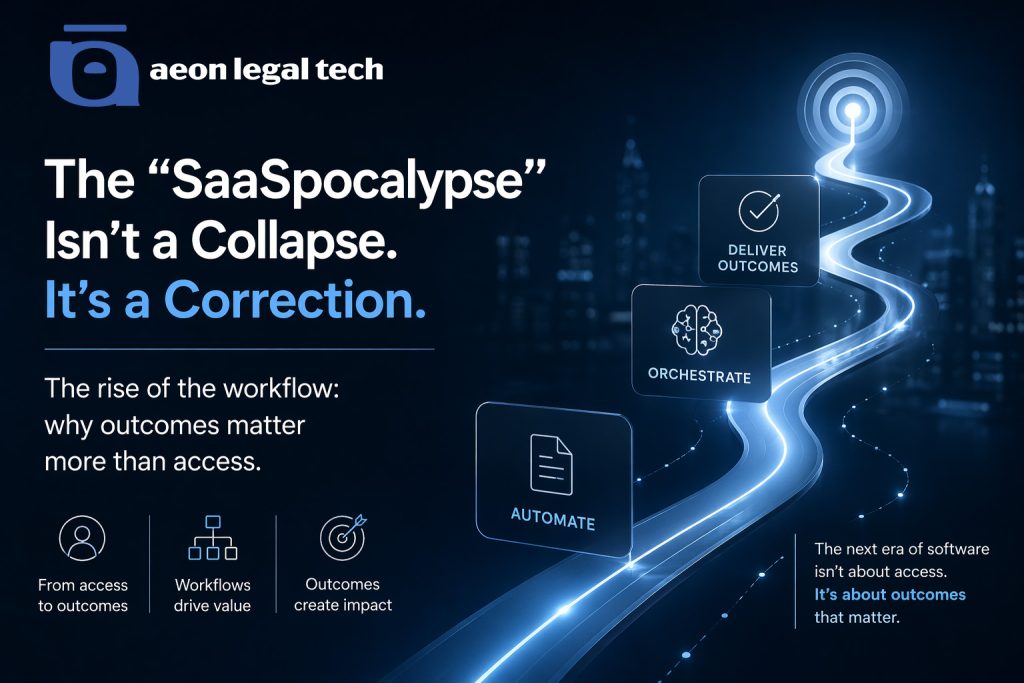
What some are calling the “SaaSpocalypse” isn’t a collapse. It’s a correction.
For years, software has been sold on access per seat, per license, per feature. But access doesn’t guarantee results. And in high-stakes environments, results are the only thing that matter.
The standard has shifted: not what software can do, but what it gets done.
Most AI tools today sit on top of existing systems.
But they don’t consistently improve outcomes. Why? Because they’re not embedded in the workflow, they stop at insight instead of carrying work through to completion.
In legal, financial services, and enterprise operations, the challenge isn’t generating content, it’s ensuring that content:
AI that operates outside of a structured workflow cannot enforce any of this.
The next generation of software will not be defined by AI features. It will be defined by workflow intelligence.
This is where real competitive advantage will emerge.
There’s another shift happening at the same time: model fragmentation.
Different AI models perform better at different tasks. And that reality isn’t going away. The future isn’t about choosing one model. It’s about orchestrating many, within a controlled workflow.
This isn’t about AI replacing software. It’s about software finally delivering outcomes. The winners won’t be the fastest to ship features. They’ll be the ones who embed intelligence into the way work actually gets done.
The SaaSpocalypse isn’t the end of SaaS. It’s the beginning of software that actually works.