
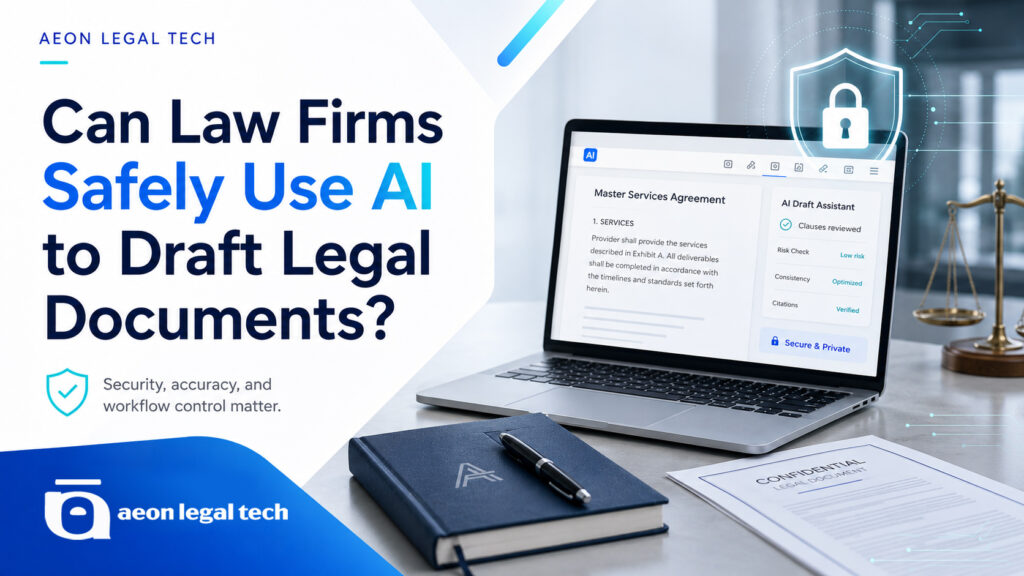
AI can significantly reduce the time required to create first drafts of transactional legal documents, but law firms need to evaluate more than speed before adopting an AI platform. Security, confidentiality, accuracy, workflow controls and the way a platform handles client data should all be part of the evaluation process.
Aeon Legal Tech is designed specifically for transactional legal work and helps legal teams generate first drafts and abstracts in minutes while keeping security and document control at the center of the workflow.
One of the first questions a law firm should ask is what happens to the information entered into an AI platform. Legal documents routinely contain sensitive client, financial and transaction information, making data security an essential consideration.
Aeon states that its platform uses enterprise-grade security and that customer information is not used to train the underlying large language model.
General-purpose AI tools can generate text, but transactional legal work requires structured workflows, document standards and repeatable processes. Purpose-built legal technology can help teams automate portions of document creation while maintaining established legal and organizational standards.
Aeon was designed by lawyers specifically to support transactional legal workflows.
AI document automation is best viewed as a way to accelerate the creation of a strong first draft—not as a replacement for professional legal judgment. By reducing the manual effort involved in drafting and processing documents, attorneys can spend more time reviewing substantive issues, negotiating terms and advising clients.
Aeon positions its platform around helping teams move drafting work from hours to minutes so professionals can focus on higher-value work.
Transactional teams often rely on templates, prior documents and institutional knowledge when creating new agreements. A structured AI workflow can help standardize how those resources are applied while reducing repetitive drafting and document-processing work.
For organizations handling significant transaction volume, that consistency can become just as important as speed.
Before adopting an AI solution, firms should evaluate:
Aeon combines AI-powered drafting and document automation with a secure platform designed for law firms, banks and enterprise legal teams.